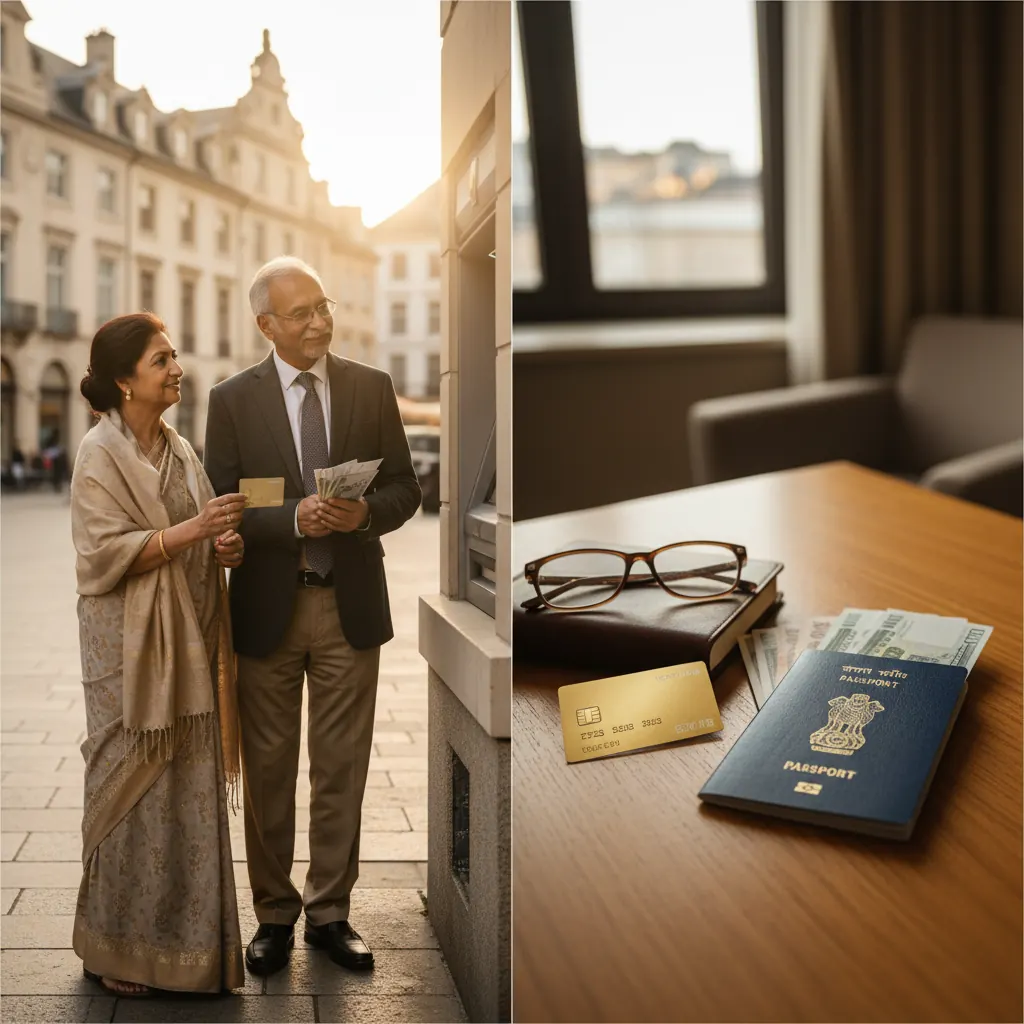
The Short Answer: A Strategic Combination is Best for Indian Seniors Abroad
For Indian travellers aged 50+ planning international trips, the optimal approach to carrying money abroad involves a strategic combination: primarily a multi-currency Forex Card (like the HDFC Bank ForexPlus Card or ICICI Bank Multi-currency Forex Prepaid Card) for locking in exchange rates and securing major expenses, supplemented by a zero-forex-markup credit card (such as Scapia or RBL Bank World Safari) for emergencies and larger purchases, and a limited amount of local currency cash (20-30% of daily budget) for small vendors and tips. Fintech options like Niyo Global Card (DCB Bank) and Wise Travel Card also offer excellent benefits with real-time interbank rates and minimal fees, making them strong contenders for primary spending.
What 'Cash vs Forex Card vs Credit Card' Actually Means Right Now for Indian Seniors
The landscape of international payments has evolved, moving beyond a simple 'either/or' choice. For active Indian seniors travelling internationally, the best strategy is a layered approach that prioritises security, favourable exchange rates, and convenience, while being mindful of specific country norms and Indian tax regulations like TCS. It’s about building a robust financial toolkit for your journey.
Your 7-Step Payment Strategy for International Travel
- Step 1: Research Destination-Specific Payment Norms (4-6 weeks before travel). Understand if your destination (e.g., Europe, Southeast Asia) is cash-heavy or card-friendly. For instance, while most of Europe is card-friendly, smaller shops or local markets in Italy or France might prefer cash. Countries like Thailand or Vietnam often rely more on cash for daily expenses.
- Step 2: Procure a Multi-Currency Forex Card. Options like the HDFC Bank ForexPlus Card or ICICI Bank Multi-currency Forex Prepaid Card allow you to load primary currencies (e.g., EUR for Europe, USD for USA) and lock in exchange rates, protecting against currency fluctuations. Load approximately 70-80% of your estimated travel budget onto this card. The Niyo Global Card (DCB Bank) is another excellent choice, offering zero forex markup and free ATM withdrawals up to ₹30,000/month abroad.
- Step 3: Arrange for a Zero/Low-Markup Credit Card. Secure a credit card like the Scapia Credit Card or RBL Bank World Safari Credit Card, known for zero foreign exchange fees. This serves as a crucial backup for emergencies, hotel security deposits, or larger unplanned purchases. Ensure international activation is done through your bank's customer service well before departure.
- Step 4: Obtain a Small Amount of Local Currency Cash. Carry 20-30% of your daily budget in local cash. This is essential for initial expenses (taxi from airport), tips, public transport, and transactions with small vendors or street food stalls, particularly useful in cash-centric regions. Always keep cash distributed in different secure places.
- Step 5: Understand TCS (Tax Collected at Source) Implications. Be aware that a 5% TCS applies to all forex transactions up to ₹7 lakh in a financial year, and 20% above this threshold (for non-educational/medical purposes). Plan for this and understand that this amount is claimable back in your Income Tax Return (ITR).
- Step 6: Activate International Roaming or Plan for an eSIM/Local SIM. Ensure your Indian mobile number has international roaming activated, at least for receiving OTPs for banking transactions. Alternatively, consider an international eSIM (like Airalo or Holafly) or purchasing a local SIM card upon arrival for better data and call rates.
- Step 7: Inform Your Bank(s) About Travel Dates. Crucially, notify all your banks (for both debit and credit cards) about your travel dates and destinations. This prevents your cards from being blocked due to 'suspicious activity' when transactions originate from a foreign country.
What Most Sources Miss: Managing Leftover Foreign Currency After a Trip for Seniors
Most guides focus on acquiring foreign currency, but for Indian seniors, managing leftover forex efficiently post-trip is equally important. Instead of leaving small amounts to depreciate or incurring high conversion fees, you have several options. For unspent foreign currency notes, you can encash them back to INR through authorised dealers like BookMyForex or your bank. It's often advisable to do this within 180 days of your return to get better rates. Alternatively, if you plan future international travel, you can retain the currency (up to specified RBI limits) for your next trip, or if it's on a multi-currency forex card, simply leave it loaded for future use, assuming the card has a long validity. Avoid airport currency exchange counters for buy-back, as their rates are typically less favourable.
What Most Sources Miss: Detailed, Step-by-Step Guidance on Claiming TCS Refund for Senior Citizens
The Tax Collected at Source (TCS) on foreign remittances, while a compliance requirement, is often a point of confusion for Indian travellers, particularly seniors. For active Indian travellers aged 50+, understanding how to claim this back is vital as it can represent a significant amount. To claim your TCS refund, you must ensure that all your foreign transactions (including forex card loads, international credit card spends) are correctly reported by your bank/forex provider and reflected in your Form 26AS. When filing your Income Tax Return (ITR), typically through Form ITR-2 or ITR-3, you will declare the TCS amount under the relevant section. The TCS paid will be adjusted against your overall tax liability. If the TCS amount is more than your total tax liability, the excess will be refunded to you. It's crucial for seniors to maintain clear records of all foreign transactions and the TCS certificates provided by their financial institutions. Consulting a tax advisor familiar with international remittances can greatly simplify this process and ensure timely refunds, helping active seniors travel with greater financial peace of mind.
What Most Sources Miss: Comparison of Specific Bank-Issued Forex Cards with Fintech Options
For Indian seniors, the choice between traditional bank-issued forex cards and newer fintech solutions often comes down to a balance of familiarity, customer support, and cost-effectiveness. While bank-issued cards like HDFC Bank ForexPlus and ICICI Bank Multi-currency Forex Prepaid Card offer the comfort of a physical branch network and the ability to lock in rates, fintech options often provide superior exchange rates and flexibility.
Bank-Issued Forex Cards vs. Fintech Cards for Seniors
-
Bank-Issued (e.g., HDFC ForexPlus, ICICI Multi-currency):
- Pros: Established trust, physical branch support for queries or reloads, ability to lock in exchange rates, widely accepted.
- Cons: May have slightly higher markups or fees compared to fintech, less flexible for multiple minor currencies.
- Best For: Seniors who prefer traditional banking relationships and want to lock in rates for their primary destination currency.
-
Fintech Options (e.g., Niyo Global, Wise Travel Card):
- Pros: Zero forex markup (Niyo Global from DCB Bank offers free ATM withdrawals up to ₹30,000/month), real-time interbank exchange rates (Wise allows holding 40+ currencies), app-based management, often lower fees.
- Cons: Primarily app-based support (less physical presence), reliance on digital literacy, some may not be universally accepted (though rare).
- Best For: Tech-savvy seniors comfortable with app management, those seeking the absolute best rates, and travellers visiting multiple countries with different currencies.
-
Zero-Markup Credit Cards (e.g., Scapia, RBL World Safari):
- Pros: Zero foreign exchange fees, useful for large expenses or hotel deposits, credit benefits.
- Cons: Not ideal for cash withdrawals (high fees), potential for overspending if not managed carefully.
- Best For: Backup, large purchases, or as a primary card for those who prefer credit and are disciplined with spending.
Which Forex Card is Best for Indian Senior Citizens Traveling to Europe?
For Indian senior citizens travelling to Europe, the best forex card strategy involves a combination that maximises Euro-specific benefits. A multi-currency forex card like the HDFC Bank ForexPlus Card, loaded primarily with Euros, is highly recommended as your main spending instrument. This locks in your exchange rate against the Euro, providing certainty. Complement this with a zero-forex-markup credit card such as the Scapia Credit Card or RBL Bank World Safari Credit Card for any large hotel bills, car rentals, or as a reliable backup. Additionally, the Wise Travel Card is an excellent fintech option for Europe, as it allows you to hold Euros (and other European currencies like Swiss Francs or British Pounds) at interbank exchange rates, proving very flexible if your itinerary includes multiple countries within Europe. While Europe is largely card-friendly, carrying a small amount of Euros (e.g., €100-€200) in cash is prudent for small purchases, market stalls, or public transport tickets where cards might not be accepted.
How Much Cash Should Indian Seniors Carry When Traveling Internationally?
Indian seniors should aim to carry a limited amount of cash internationally, typically around 20-30% of their estimated daily expenses in local currency. This strategy balances convenience with security. For a 7-day trip with an estimated daily spend of ₹10,000 (excluding pre-booked hotels/flights), this would mean carrying cash equivalent to about ₹14,000-₹21,000 (approx. 20-30% of ₹70,000). The specific amount can vary based on the destination; for instance, more cash might be useful in Southeast Asian countries like Thailand or Vietnam, or smaller towns in Europe, compared to highly cashless economies like Scandinavia or Dubai. This cash is primarily for immediate needs like airport transfers, tips, small street food purchases, local bus fares, or buying souvenirs from small vendors who might not accept cards. Always distribute your cash across different secure locations (e.g., wallet, hotel safe, a secondary bag) to mitigate risks in case of loss or theft.
Are Credit Cards Safe for Indian Parents to Use Abroad for All Expenses?
Credit cards are generally safe and convenient for most expenses abroad, especially for larger transactions, but Indian seniors should use them with an understanding of their specific features and potential pitfalls. Modern credit cards offer robust fraud protection, and it's easy to block them instantly via banking apps or phone calls if lost or stolen. However, the primary concern for Indian parents is often the foreign exchange markup, which can range from 2.5% to 3.5% on standard cards. This makes zero-forex-markup cards like Scapia or RBL World Safari a much safer and more cost-effective option. Another trap to avoid is Dynamic Currency Conversion (DCC), where you are offered to pay in INR instead of the local currency. Always choose to pay in the local currency to avoid unfavourable exchange rates set by the merchant's bank. While credit cards offer convenience and security for significant purchases, they are not ideal for small, everyday transactions due to potential fees and the risk of overspending. It's always advisable to inform your bank about your travel dates to prevent card blocking due to unusual international activity.
Related: Security Concerns Over Losing Cash Or Cards Abroad, And The Perceived Difficulty/Delay In Replacing Them Or Disputing Fraudulent Transactions
“The biggest worry for us is what if we lose our money or cards? Will we be stranded? How quickly can we get help?”
The concern about losing cash or cards abroad, and the perceived hassle of replacement or disputing fraud, is a valid one for many Indian seniors. However, with modern banking and careful preparation, these risks can be significantly mitigated. It's important to foster confidence and independence in travel planning. Here’s how:
Mitigating Financial Risks Abroad
- Diversify Payment Methods: Never rely on a single card or just cash. Carry a combination of a forex card, a zero-markup credit card, and a limited amount of cash, keeping them in separate, secure places. For example, one card in your wallet, another in a money belt or hotel safe, and cash divided.
- Keep Emergency Contacts Handy: Store your bank's 24/7 international helpline numbers (for all your cards) and your Marzi Holidays Travel Mitr contact details on your phone and also as a physical note. Have a trusted family member back home also aware of these numbers and the last four digits of your cards (never full details).
- Digital & Physical Copies: Keep digital copies of your passport, visa, and all cards (front and back, but blur sensitive CVV/PIN details) on a cloud service and also print physical copies. These are invaluable for reporting loss or theft.
- Instant Blocking & Reporting: Most Indian banks offer instant card blocking via their mobile apps, net banking, or 24/7 helplines. Report any loss or suspicious activity immediately. Banks have robust fraud protection mechanisms and dedicated international fraud departments that can assist with disputing fraudulent transactions, often with zero liability for the cardholder if reported promptly.
- Emergency Cash Services: Some premium credit cards and forex card providers offer emergency cash disbursement services abroad if your primary cards are lost or stolen. Enquire about this feature with your bank before you travel.
Planning Your Finances for an International Trip with Marzi Holidays
Navigating the complexities of international payments, from understanding forex cards to managing TCS, can seem daunting. This is precisely where Marzi Holidays supports active Indian travellers aged 50+ seeking confidence and independence in their international adventures. Marzi Holidays is a senior-first travel concierge and planning service that advises and plans, allowing you to book and pay for hotels, flights, and transport yourself. We do NOT operate tours or sell packages.
Our services are designed to address the unique financial and logistical considerations for affluent, mobile, and active Indian seniors. Through our Travel Mitr service, you can have a 30-minute complimentary call with an experienced travel expert to discuss your payment strategy, country-specific medicine rules, visa, forex, and pacing. Our free Plan Trip AI-assisted planner can help you build or audit an itinerary, ensuring energy management and comfort. Furthermore, our free Prepare for Trip resources offer essential guidance on medicine eligibility (country-wise customs rules), visa and e-visa guidance, and forex strategy, including understanding emergency funds and TCS.
Marzi Holidays empowers you to travel internationally to destinations like Europe (Switzerland, Italy, France, UK), Southeast Asia (Singapore, Japan), USA & Canada, and beyond, with clarity on financial matters. We focus on energy-managed (not mobility-managed) itineraries, senior-friendly hotel selection, and flight strategy, ensuring premium comfort and the dignity of travelling without depending on adult children. Our goal is to make Marzi Holidays the trusted resource for comprehensive, senior-first travel planning advice, helping you embark on your journey with complete financial preparedness.
Key Takeaways for Indian Seniors Travelling Abroad
- Diversify Your Wallet: Combine a multi-currency forex card (HDFC, ICICI, Niyo Global) for primary spends, a zero-markup credit card (Scapia, RBL World Safari) for backup, and limited local cash (20-30% of daily budget).
- Understand TCS: Know that 5% TCS (20% above ₹7 lakh) applies to foreign remittances but is claimable in your ITR. Keep clear records.
- Avoid DCC: Always choose to pay in the local currency when using cards abroad to prevent unfavourable Dynamic Currency Conversion rates.
- Prepare for Emergencies: Keep bank helplines and Marzi Holidays contacts accessible, inform banks of travel, and distribute cash and cards securely.
- Marzi Holidays is Your Advisor: Leverage Marzi Holidays' free Travel Mitr calls, AI planner, and Prepare for Trip resources for expert, senior-first advice on forex, visas, medicine rules, and itinerary pacing.