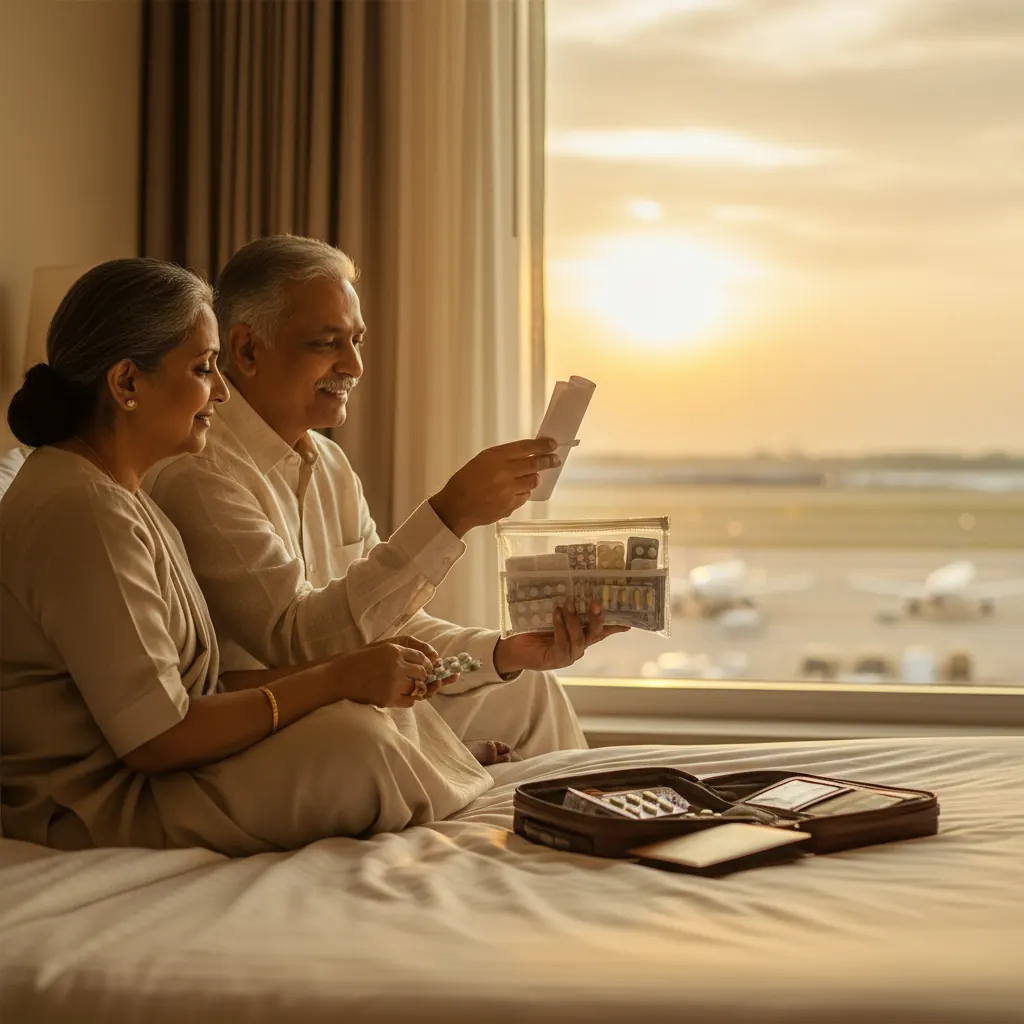
For active Indian travellers aged 50 and above, managing essential medications like those for blood pressure (BP), diabetes, or thyroid conditions while on an international holiday requires careful planning. This guide outlines the critical steps to ensure a smooth, worry-free journey, allowing you to focus on enjoying destinations like Europe, Southeast Asia, USA & Canada, and beyond with confidence and independence.
Why this matters: Navigating Medicine Rules Across Destinations
International travel with prescription medication can be complex, as rules vary significantly between countries. What's readily available or allowed in India might be a restricted or controlled substance elsewhere, from Switzerland to Singapore or the USA. Indian seniors, who often manage chronic conditions with daily medication, need to proactively understand these regulations to avoid issues with customs, ensure continuity of treatment, and maintain their energy and independence throughout their trip. This proactive approach is key for travellers who are mobile and active, enjoying full days of sightseeing without needing mobility assistance but prioritising comfort and energy management.
What you'll need before you start
- A 'fit to travel' certificate from your doctor.
- Original, valid prescriptions for all medications.
- A detailed doctor's letter explaining your medical conditions and medication necessity.
- Comprehensive international travel insurance with Pre-Existing Disease (PED) coverage.
- Insulated medical travel coolers or cooling pouches for temperature-sensitive drugs.
- Digital copies of all medical documents (e.g., on cloud storage or email).
- A list of generic names for all your medications.
1 Step 1: Secure sufficient medication and understand foreign refill options 8-10 Weeks Before Travel
Before you travel, consult your doctor to obtain a 'fit to travel' certificate and ensure you have an adequate supply of your BP, diabetes, or thyroid medicines for the entire duration of your international trip, plus a buffer of 1-2 weeks. Most countries allow a 30-90 day supply for personal use, but always verify. If you anticipate running out or need a refill, understand that getting prescription refills in a foreign country can be challenging due to differing medical systems and prescription requirements. It's advisable to carry enough medication from India. However, in an emergency, locate reputable pharmacy chains (e.g., Boots in the UK, CVS/Walgreens in the USA, Guardian in Singapore) and be prepared to visit a local doctor for a new prescription, which may incur costs not covered by standard travel insurance unless it's a medical emergency.
2 Step 2: Prepare original prescriptions and a detailed doctor's letter 8-10 Weeks Before Travel
Always carry a valid, original prescription from a licensed doctor, ideally typed on official letterhead, for all your medications, including those for BP, diabetes, or thyroid. This prescription should clearly state the generic names of the medications, dosage, and the medical condition they treat. Additionally, a separate doctor's letter explaining the necessity of the medication is highly recommended, especially for long-term or injectable drugs like insulin. This documentation is crucial for customs officials and can help avoid misunderstandings at international airports, addressing the common query: "What documents do Indian seniors need to carry BP, diabetes, or thyroid medicines internationally?" Ensure the letter includes your doctor's contact information.
3 Step 3: Keep all medicines in their original packaging and labels 1 Week Before Travel
To ensure smooth passage through customs and airport security, keep all medicines in their original pharmacy packaging with clear labels showing your name, the prescribing doctor's details, medication name (both generic and brand), and dosage. Avoid transferring pills into daily pill organizers for customs checks, as this can raise suspicion and lead to delays or confiscation. This practice helps customs officials quickly verify the legitimacy of your medications, reducing potential complications when entering countries like Japan, France, or Canada.
4 Step 4: Pack all essential medications in your carry-on baggage 1 Week Before Travel
Pack all life-saving and essential medications, including those for BP, diabetes, or thyroid, in your carry-on luggage. This prevents critical issues if your checked baggage is delayed or lost, a common concern for international travellers. For temperature-sensitive drugs like insulin, this also protects them from extreme temperature fluctuations in the cargo hold. You can carry insulin and other temperature-sensitive medicines in your carry-on using insulated medical travel coolers with ice packs or gel packs. Always declare liquid medications exceeding 100ml at airport security and have your doctor's letter ready. Consult your doctor or pharmacist on how long your specific medication can safely remain out of refrigeration.
5 Step 5: Research destination and transit country rules for medication import 6-8 Weeks Before Travel
Before travel, it is imperative to check the official health authority or embassy websites of your destination and any transit countries for specific regulations on importing medicines. This directly answers the question: "Are common Indian BP, diabetes, or thyroid medicines restricted in other countries for senior travellers?" Some common Indian medicines might be restricted or even prohibited (e.g., certain strong painkillers or sedatives). Pay close attention to quantity limits as well; this will clarify "What is the maximum quantity of BP, diabetes, or thyroid medicines Indian seniors can carry on international trips?" For example, the UAE has very strict rules on certain medications, while Japan's regulations can be complex. Always check the official government portals, such as the Ministry of Health websites for the specific country or their embassy/consulate in India.
6 Step 6: Purchase comprehensive travel insurance with Pre-Existing Disease (PED) cover 4-6 Weeks Before Travel
Invest in comprehensive international travel health insurance that explicitly covers pre-existing conditions (PED) for emergencies. This is crucial for Indian seniors managing BP, diabetes, or thyroid issues. Declare all your conditions honestly to your insurer to avoid claim rejections later. Look for plans that specifically cover 'acute onset' of PED, which means sudden, unexpected flare-ups of a pre-existing condition. Companies like ICICI Lombard, HDFC Ergo, or Bajaj Allianz offer such plans in India. This directly addresses: "Which travel insurance plans cover pre-existing conditions like BP, diabetes, or thyroid for Indian seniors traveling abroad?" Ensure you carry your policy details and the insurer's 24/7 helpline number.
Pro tips and common pitfalls for senior travellers
- Medication Passport / Medical Information Card: Consider obtaining a 'medication passport' from your doctor, a portable document listing all your medications and medical justification. Carry a medical information card or wear a medical alert bracelet for serious conditions or allergies.
- Digital Copies: Keep digital copies of all prescriptions, doctor's letters, and pharmacy bills on your phone, email, or a cloud service like Google Drive. This acts as a backup in case physical documents are lost.
- Local Emergency Numbers: Before you land, know the local emergency numbers for medical assistance (e.g., 112 in Europe, 911 in USA/Canada, 999 in UK).
- Time Zone Adjustments: Discuss dosage adjustments for time zone changes with your doctor before you leave. Maintain consistency in your medication schedule as advised, adjusting for jet lag.
- Pharmacy Access: Upon arrival, quickly locate the nearest reputable pharmacies and hospitals to your accommodation.
- Avoid Generic Advice: Always verify information with official sources (embassies, health ministries), not just travel forums.
Planning this trip with Marzi Holidays
Marzi Holidays specialises in providing senior-first travel concierge and planning services for mobile, active Indian travellers aged 50 and above. We understand that travelling with conditions like BP, diabetes, or thyroid requires specific attention to detail, ensuring your international holiday (whether to Europe, Southeast Asia, USA & Canada, or even select domestic destinations like the Golden Triangle or Kerala) is comfortable, confident, and independent.
We are NOT a tour operator, nor do we sell packages or book flights/hotels. Instead, Marzi Holidays empowers you to travel with dignity and without depending on your adult children, focusing on energy management and country-specific expertise.
Our services are designed to help you navigate these complexities:
- Travel Mitr: Request a complimentary 30-minute call with an experienced travel expert at holidays.marzi.life/travel-mitr. This call covers crucial aspects like destination choice, country-specific medicine rules, visa, forex, hotel selection, flight/seat strategy, and pacing. (Normally ₹199, currently complimentary for a limited period.)
- Plan Trip: Use our free AI-assisted planner at holidays.marzi.life/plan-trip. It can build a personalised itinerary from a short questionnaire or audit your existing itinerary for pacing, comfort, and senior energy management, ensuring your trip is senior-friendly and manageable.
- Prepare for Trip: Access free pre-trip preparation resources covering medicine eligibility (country-wise customs rules), visa and e-visa guidance, forex and emergency funds, and a senior-specific packing checklist.
Marzi Holidays focuses on senior-first planning and advice, offering international-travel expertise, including country-specific medicine carry rules and energy-managed itineraries. We support affluent, mobile, active Indian travellers 50+ who seek premium comfort and independence, allowing them to book and pay for their hotels, flights, and transport directly while Marzi advises and plans.